


Sensitive skin routine guide: Soothe, strengthen, protect
If you have sensitive skin in Canada, you already know the feeling: tight, dry, irritated skin that flares up the moment temperatures drop or you try a new product. It is not just uncomfortable — it is exhausting. Clinical studies show ceramide moisturisers significantly improve hydration by up to 42% and reduce water loss through the skin, which means real, measurable relief is possible. The key is building a routine that works with your skin, not against it. This guide walks you through every step, from understanding your skin’s needs to choosing the right ingredients and adjusting for Canada’s demanding seasons.
Table of Contents
- Understanding sensitive skin and its challenges
- Key ingredients and what to avoid
- Essential tools and products for your sensitive skin routine
- Step-by-step guide: Morning and night routine
- Troubleshooting: Avoiding common mistakes and adjusting for seasons
- Measuring progress: How to know your routine is working
- Premium solutions for sensitive skin: Next steps
- Frequently asked questions
Key Takeaways
| Point | Details |
|---|---|
| Barrier repair is essential | Prioritizing ceramides and minimal, fragrance-free routines helps restore and protect sensitive skin. |
| Canadian climate demands | Sensitive skin routines should adapt with the seasons to address dryness and environmental stress. |
| Results in four weeks | Consistent, science-backed routines can reduce dryness by up to 93 percent in one month. |
| Know your ingredients | Avoid fragrances and harsh actives; choose pH-balanced, derm-tested options for real relief. |
| Track your progress | Monitor improvements using photos or journals to see subtle but meaningful skin changes. |
Understanding sensitive skin and its challenges
Sensitive skin is not a flaw — it is a skin type that reacts more readily to environmental triggers, product ingredients, and lifestyle factors. In Canada, the challenges are especially pronounced. Cold winters, biting winds, and dry indoor heating strip moisture from the skin’s surface and weaken the barrier that keeps irritants out and hydration in.
Your skin barrier is the foundation of healthy skin. When it is compromised, everything else — redness, tightness, stinging — follows.
44% of Canadians experience sensitive skin, making it one of the most common skin concerns in the country. Yet many people still reach for products that worsen their symptoms without realising it. Common signs that your barrier needs support include:
- Persistent dryness or flaking, even after moisturising
- Redness or blotchy patches after cleansing
- A tight, uncomfortable feeling that lingers
- Stinging or burning when applying products
- Frequent flare-ups with no obvious cause
The good news is that 4-week studies show 93.7% dryness reduction, a 72.5% increase in hydration, and a 12.7% drop in transepidermal water loss (TEWL, the rate at which water escapes through your skin) when using the right approach. Understanding skin barrier protection is the first step toward lasting relief.
Key ingredients and what to avoid
Knowing what to look for on a product label is one of the most empowering things you can do for your skin. Not all moisturisers are created equal, and for sensitive skin, the ingredient list matters far more than the price tag or packaging.
Ingredients to look for:
Ceramide moisturisers significantly improve SCORAD scores (a clinical measure of skin condition severity) and reduce TEWL by 12 to 28%. Ceramides are lipids (fats) that naturally exist in your skin barrier. When levels drop, the barrier weakens. Replenishing them through your moisturiser helps restore structure and resilience. Specifically, longer acyl chain ceramides (C24-C30) are more effective for barrier recovery than shorter chain versions.
Other beneficial ingredients include:
- Hyaluronic acid: A humectant that draws water into the skin
- Niacinamide: Calms redness and supports barrier function
- Glycerin: Lightweight and deeply hydrating
- Petrolatum: An occlusive that seals moisture in
Ingredients to avoid:
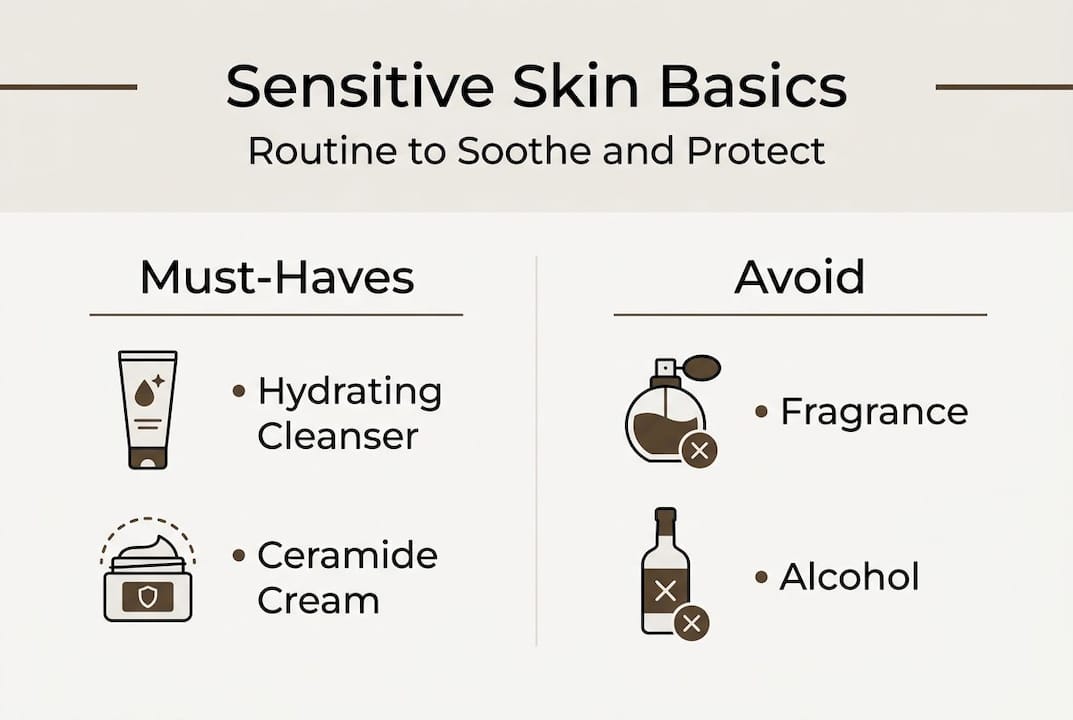
- Synthetic fragrances and parfum
- Alcohol (especially denatured alcohol)
- Strong exfoliating acids like glycolic or salicylic acid
- Essential oils, which can be sensitising
| Ingredient | Benefit | Best for |
|---|---|---|
| Ceramides (C24-C30) | Barrier repair, hydration | Dry, sensitive skin |
| Hyaluronic acid | Deep moisture retention | All skin types |
| Petrolatum | Moisture sealing (occlusive) | Very dry or cracked skin |
| Niacinamide | Redness reduction, barrier support | Sensitive, reactive skin |
| Fragrance | None | Avoid entirely |
Research comparing ceramide vs occlusive moisturisers shows that ceramides are superior for SCORAD improvement, though occlusives may match or exceed ceramides for reducing TEWL in some cases. Using both together is often the most effective strategy.
Pro Tip: Flip the bottle and read the first five ingredients. If fragrance or alcohol appears early on the list, put it back on the shelf.
Essential tools and products for your sensitive skin routine
Building a sensitive skin routine does not require a cabinet full of products. In fact, the fewer steps, the better. A minimal, targeted approach reduces the risk of triggering a reaction and makes it easier to identify what is working.
Your core toolkit should include:
- Hydrating, fragrance-free cleanser: Removes impurities without stripping the skin
- Ceramide moisturiser: Repairs and strengthens the barrier
- Broad-spectrum sunscreen (SPF 30 or higher): Protects against UV-related barrier damage
- Soothing serum (optional): Adds an extra layer of calm on reactive days
Optional additions for Canadian homes:
- A humidifier to counteract dry indoor heating in winter
- A gentle balm for targeted relief on very dry patches
Experts recommend minimal routines to prevent irritation and product overload. Canadian brands like Skinfix, a Toronto-based brand offering derm-tested barrier solutions, are formulated with Canada’s climate in mind. Explore Canadian skincare staples designed for sensitive skin in Northern conditions.

| Product type | Purpose | Priority |
|---|---|---|
| Hydrating cleanser | Gentle cleansing | Essential |
| Ceramide moisturiser | Barrier repair | Essential |
| SPF serum | UV protection | Essential |
| Soothing serum | Calming reactive skin | Optional |
| Humidifier | Indoor humidity support | Recommended in winter |
For skincare suited to Canadian seasons, adjusting your toolkit as the weather shifts is just as important as the products themselves.
Step-by-step guide: Morning and night routine
Once you have the right products, putting them together in the right order makes all the difference. Here is a simple, evidence-backed daily protocol.
Morning routine:
- Rinse your face with lukewarm water or use your hydrating cleanser gently
- Pat skin dry with a soft towel — do not rub
- Apply your ceramide moisturiser within 60 seconds of cleansing, while skin is still slightly damp
- Finish with a broad-spectrum SPF serum or sunscreen
Evening routine:
- Cleanse with your fragrance-free, gentle cleanser to remove the day’s buildup
- Pat dry and apply ceramide moisturiser immediately
- On reactive nights, layer a soothing serum underneath your moisturiser for added comfort
Following this radiant skin routine consistently is what drives results. 4-week routines show 93.7% dryness reduction and a 72.5% increase in hydration — but only when the routine is followed daily.
Pro Tip: The 60-second rule is real. Applying moisturiser while your skin is still slightly damp helps lock in that surface moisture before it evaporates. Set a timer if you need to.
Troubleshooting: Avoiding common mistakes and adjusting for seasons
Even a well-designed routine can go off track. Knowing the warning signs and how to respond keeps your skin on a steady path forward.
Signs your routine may be too harsh:
- Stinging or burning immediately after cleansing
- Red patches that appear within minutes of applying a product
- Skin that feels tight or dry despite moisturising
- Increased breakouts or texture changes
If you notice any of these, strip your routine back to just a cleanser and moisturiser for a week. Reintroduce products one at a time, waiting at least five days between additions.
Seasonal adjustments for Canadian skin:
Sensitive skin routines must adjust with the seasons to prevent flare-ups. Here is how to adapt:
- Winter: Increase the richness of your ceramide moisturiser, use a humidifier at home, and consider a gentle balm for extra-dry areas
- Spring and fall: Maintain your core routine but watch for wind-related irritation
- Summer: Switch to lighter textures, increase SPF, and reapply sunscreen throughout the day
When in doubt, do less. Sensitive skin responds better to consistency with fewer products than to frequent changes with many.
For detailed guidance on adapting your routine for seasons, we recommend revisiting your product choices at the start of each season.
Measuring progress: How to know your routine is working
One of the most motivating things you can do is track your skin’s improvement. Sensitive skin responds gradually, and small changes are easy to miss without a reference point.
What to look for after 4 weeks:
| Marker | Expected improvement |
|---|---|
| Dryness | Up to 93.7% reduction |
| Skin hydration | Up to 72.5% increase |
| TEWL (water loss) | Up to 12.7% decrease |
| Redness and irritation | Visibly calmer, fewer flare-ups |
SCORAD scores, TEWL, and hydration are the clinical markers used to measure sensitive skin improvement. You do not need lab equipment to track your own version of these. Take a photo of your skin in natural light every week. Note how it feels after cleansing. Record how often you experience flare-ups.
Journalling your skin’s response is a simple but powerful tool. It helps you connect cause and effect — whether a new product helped or a change in weather triggered a reaction. Tracking your progress with skin barrier health over time keeps you informed and in control.
Consistency is the single biggest factor in results. A simple routine followed every day outperforms a complex one used sporadically.
Premium solutions for sensitive skin: Next steps
You now have a clear, evidence-based framework for caring for your sensitive skin through every Canadian season. The next step is making sure the products in your routine are genuinely formulated to deliver on their promises.

At Body Face Scalp™, we develop our formulas specifically for Canadian skin conditions — barrier-focused, fragrance-free, and built around ingredients that clinical research supports. Our Barrier Restoring Moisturiser is designed to repair and protect sensitive skin with the ceramide and humectant profile your barrier needs most. Explore our full skincare collection to find targeted solutions that simplify your routine without compromising results. When you are ready to go deeper, our Canadian barrier repair expertise is here to guide you every step of the way.
Frequently asked questions
How quickly will I see improvement in dryness and irritation?
Most people notice meaningful change within four weeks. 4-week studies show 93.7% dryness reduction and a 72.5% increase in hydration when using evidence-based products consistently every day.
Are ceramide moisturisers better than occlusive creams for sensitive skin?
Ceramide moisturisers are generally superior for repairing the skin barrier and improving overall skin condition scores. Occlusives may match ceramides for reducing water loss, so combining both can offer the most complete protection.
Can I use active serums like vitamin C or retinoids with sensitive skin?
These ingredients frequently trigger irritation in sensitive skin. If you choose to use them, introduce one at a time very slowly, starting with the lowest concentration available, and monitor your skin closely for at least two weeks before increasing use.
Do I need to change my routine with the seasons in Canada?
Absolutely. Seasonal skincare adjustments are essential for sensitive skin in Canada, where humidity, temperature, and wind conditions shift dramatically between winter and summer.
What is the best way to test new products on sensitive skin?
Always patch test on a small, discreet area such as the inner forearm or behind the ear before applying a new product to your face. Wait 24 to 48 hours and check for any redness, itching, or swelling before proceeding.