


Master your face care step by step for radiant skin
Dry patches, unexpected breakouts, and stubborn dark spots can leave you feeling frustrated with your skincare routine. Many Canadian women between 25 and 40 struggle with dryness, sensitivity, and hyperpigmentation, especially during harsh seasonal transitions. The good news? A structured, ingredient-conscious face care routine can transform your skin’s health and appearance. This guide walks you through a comprehensive step by step approach tailored to address these common concerns, helping you build a regimen that repairs your skin barrier, reduces irritation, and promotes an even, luminous complexion.
Table of Contents
- Key takeaways
- Understand your skin type and needs
- Prepare the essential tools and products
- Follow the face care step by step routine
- Common mistakes and how to avoid them
- Discover barrier focused skincare products
- Frequently asked questions
Key Takeaways
| Point | Details |
|---|---|
| Know your skin type | Identify your skin type and concerns to guide product choices and routine steps. |
| Barrier focused routine | A consistent step by step routine repairs the skin barrier and reduces irritation. |
| Key ingredients to focus | Look for ceramides, hyaluronic acid, and niacinamide to support moisture and barrier health. |
| Daily sunscreen essential | Daily sun protection helps prevent hyperpigmentation and protects treatment results. |
| Patch test advised | Patch testing reduces irritation and helps tailor products for your face. |
Understand your skin type and needs
Before selecting products, you need to identify your skin type and specific concerns. Normal skin feels balanced without excessive oil or dryness. Dry skin often feels tight and may show flaking, especially after cleansing. Sensitive skin reacts easily to new products, displaying redness or stinging. Combination skin exhibits oiliness in the T zone while other areas remain dry.
Dryness and sensitivity typically signal a compromised skin barrier. This protective layer keeps moisture in and irritants out. When damaged, your skin loses hydration faster and becomes more reactive to environmental stressors. You’ll want gentle, hydrating formulas that rebuild this barrier rather than strip it further.
Hyperpigmentation appears as dark spots or uneven tone, often triggered by sun exposure, inflammation, or hormonal changes. Treating this concern requires targeted brightening agents combined with diligent sun protection. Without daily SPF, even the most effective serums can’t deliver lasting results because UV rays continuously stimulate melanin production.
Knowing your skin type guides ingredient choices that support barrier repair and hydration. Avoid products with synthetic fragrances, high alcohol content, or harsh physical exfoliants. These ingredients damage the barrier you’re working to restore. Instead, look for formulas featuring ceramides, niacinamide, and soothing botanical extracts.
Patch testing new products reduces your risk of irritation. Apply a small amount to your inner forearm or behind your ear, then wait 24 to 48 hours. If no redness, itching, or swelling appears, the product is likely safe for your face. This simple step prevents full face reactions and wasted money on unsuitable skin care items.
Pro Tip: Keep a skincare journal noting how your skin responds to new products. Track application dates, any reactions, and improvements you notice. This record helps you identify patterns and refine your routine over time.
Prepare the essential tools and products
Building an effective routine requires specific product categories, each serving a distinct purpose in addressing dryness, sensitivity, and hyperpigmentation. Your cleanser should be gentle and fragrance free to remove impurities without stripping natural oils. Harsh cleansers disrupt your skin barrier, making other products less effective.
A hydrating toner preps your skin for subsequent layers while delivering barrier supporting ingredients. Look for formulas containing snail mucin, ceramides, or hyaluronic acid. These compounds attract and bind moisture, creating an optimal environment for serum absorption.
Serums deliver concentrated active ingredients targeting specific concerns. For hyperpigmentation, vitamin C serums inhibit melanin production and brighten existing dark spots. For sensitivity and barrier repair, peptide serums strengthen skin structure and reduce inflammation. A proper selection of cleansers, toners, serums, moisturisers, and sunscreen is vital for repairing and protecting the skin barrier.
| Product category | Key ingredients | Primary function |
|---|---|---|
| Gentle cleanser | Glycerin, ceramides | Removes impurities without stripping oils |
| Hydrating toner | Hyaluronic acid, snail mucin | Preps skin and delivers initial hydration |
| Brightening serum | Vitamin C, niacinamide | Reduces hyperpigmentation and evens tone |
| Peptide serum | Peptides, ceramides | Strengthens barrier and calms sensitivity |
| Barrier moisturiser | Ceramides, squalane | Seals moisture and repairs protective layer |
| Mineral sunscreen | Zinc oxide, titanium dioxide | Prevents UV damage and pigmentation worsening |
Your moisturiser should feature barrier repairing formulas with ceramides and hyaluronic acid. These ingredients work together to lock in hydration and rebuild your skin’s protective layer. The barrier restoring moisturiser provides this essential function while feeling lightweight on your skin.
Sunscreen is non negotiable for preventing pigmentation from worsening. Mineral based, broad spectrum formulas with zinc oxide or titanium dioxide offer physical protection without irritating sensitive skin. Apply it as your final morning step, even on cloudy days or when staying indoors near windows.
Optional tools include a facial massager for improving product absorption and circulation, plus clean cotton pads for gentle toner application. Keep these tools sanitised to prevent introducing bacteria to your freshly cleansed face.
Pro Tip: Store vitamin C serums in a cool, dark place. Light and heat degrade this ingredient quickly, reducing its effectiveness. If your serum turns brown or develops a strange smell, it’s time to replace it.
Follow the face care step by step routine
Consistency and proper sequencing maximise your products’ effectiveness. Start with the thinnest consistency and work toward the thickest, allowing each layer to absorb before applying the next. This method ensures ingredients penetrate properly rather than sitting on your skin’s surface.
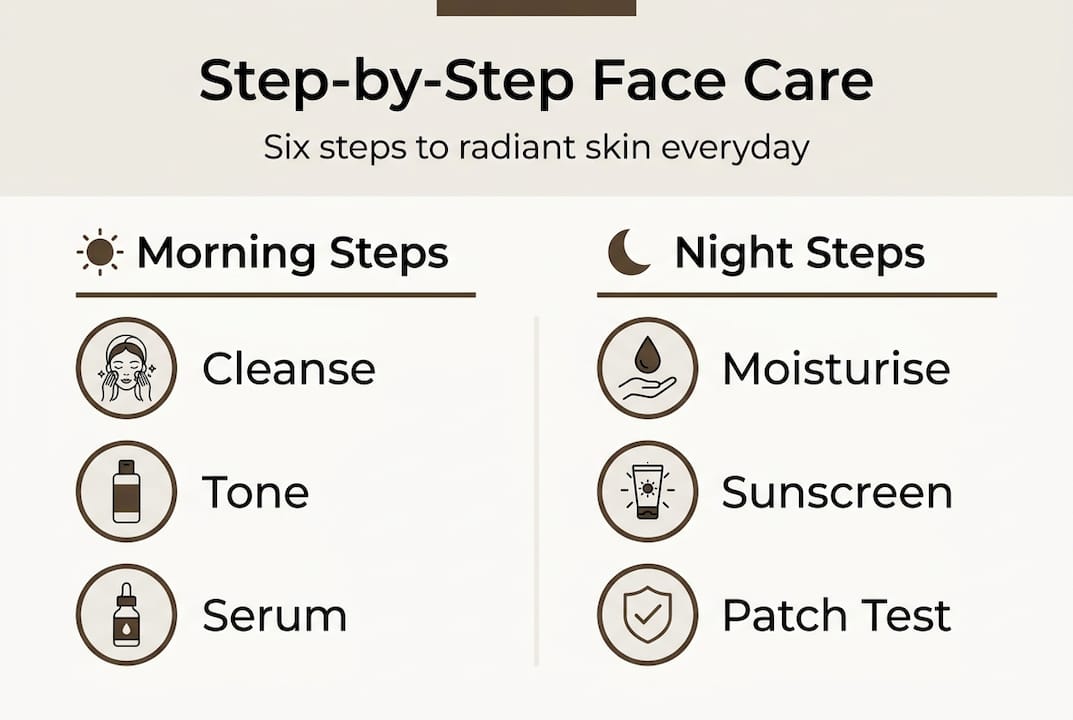
Step 1: Cleanse your face morning and night using lukewarm water and a gentle cleanser. Massage the product onto damp skin for 30 to 60 seconds, focusing on areas prone to congestion. Rinse thoroughly and pat dry with a clean towel. Never rub your face aggressively, as this irritates sensitive skin.

Step 2: Apply hydrating toner immediately after cleansing while your skin is still slightly damp. Pour a small amount onto your palms or a cotton pad, then press gently into your face and neck using patting motions. This technique enhances absorption and feels soothing.
Step 3: Use skin correcting serum focused on hyperpigmentation. Dispense 2 to 3 drops onto your fingertips and apply to areas with dark spots or uneven tone. Vitamin C works best on clean, toned skin before heavier products.
Step 4: Apply multi peptide serum for sensitivity and hydration. Use 2 to 3 drops, gently pressing the product into your entire face and neck. Peptides strengthen your barrier and reduce inflammation, making them essential for reactive skin.
Step 5: Seal everything with barrier restoring moisturiser to lock moisture and repair your protective layer. Take a pea sized amount and warm it between your palms before pressing onto your face. This technique distributes the product evenly without tugging delicate skin.
Step 6: In the morning, finish with sunscreen serum to protect against UV damage. Apply a nickel sized amount, ensuring coverage on your face, neck, and ears. Wait 15 minutes before makeup application to allow the sunscreen to set properly. Proper sequence and technique optimise ingredient absorption and skin barrier restoration.
Pro Tip: Wait 30 to 60 seconds between each step, especially after applying serums. This brief pause lets products absorb fully before you layer the next one, preventing pilling and maximising efficacy.
Common mistakes and how to avoid them
Even with quality products, incorrect application undermines your results. Over exfoliating or using harsh cleansers damages your skin barrier faster than you can repair it. Many women believe scrubbing harder produces better results, but this approach strips protective oils and triggers inflammation. Limit exfoliation to once or twice weekly using gentle chemical exfoliants rather than abrasive scrubs.
Applying heavy creams before serums blocks absorption of active ingredients. Serums contain smaller molecules designed to penetrate deeply, while moisturisers create a protective seal on your skin’s surface. Reversing this order traps serums on top of the moisturiser where they can’t work effectively.
Skipping sun protection increases pigmentation and sensitivity regardless of how diligently you apply other products. UV exposure stimulates melanin production and breaks down collagen, counteracting your entire routine’s benefits. Make sunscreen your non negotiable final morning step, reapplying every two hours if you’re outdoors.
Not patch testing new products causes irritation that sets back your progress. Your skin might tolerate ingredients individually but react when combining multiple new products simultaneously. Introduce one new item every two weeks to identify any problematic formulas before they affect your entire face.
Neglecting consistency delays visible improvements. Incorrect product layering and skipping sunscreen are common errors that compromise skin recovery. Skin cells turn over approximately every 28 days, meaning you need consistent application for at least one full cycle before judging a product’s effectiveness.
“Your skin barrier functions like a brick wall, with cells as bricks and lipids as mortar. Harsh products damage this structure, while gentle, consistent care rebuilds it layer by layer.”
Pro Tip: If you experience irritation, simplify your routine to just cleanser, moisturiser, and sunscreen until your skin calms. Gradually reintroduce other products one at a time to identify the culprit.
Discover barrier focused skincare products
Transforming your skincare knowledge into results requires products specifically formulated for barrier repair and Canadian climate challenges. Body Face Scalp offers a curated skincare collection designed to address dryness, sensitivity, and hyperpigmentation through ingredient led formulations.

The barrier restoring moisturiser combines ceramides and hyaluronic acid to rebuild your protective layer while delivering lasting hydration. Pair it with the sunscreen serum for comprehensive daily protection that prevents pigmentation from worsening. These products work synergistically, supporting the step by step routine outlined in this guide while addressing the unique needs of Canadian skin exposed to harsh seasonal conditions.
Frequently asked questions
How often should I follow the face care routine?
Follow this routine twice daily, morning and night, for optimal results. Consistency allows active ingredients to work effectively over time, supporting barrier repair and addressing hyperpigmentation. Your skin responds best to regular care rather than sporadic intensive treatments. Missing occasional applications won’t derail your progress, but establishing a daily habit produces the most visible improvements.
What ingredients are best for sensitive, dry skin?
Ceramides, hyaluronic acid, and peptides support barrier function and hydration without triggering irritation. These ingredients work by mimicking your skin’s natural structure, helping it retain moisture and resist environmental stressors. Avoid products containing synthetic fragrances, high alcohol content, or harsh physical exfoliants, as these strip protective oils and increase sensitivity. Niacinamide also calms inflammation while strengthening your barrier.
Can I treat hyperpigmentation with this routine?
Vitamin C serums combined with diligent sun protection effectively reduce hyperpigmentation over time. Vitamin C inhibits melanin production while brightening existing dark spots, but UV exposure continuously stimulates new pigment formation. Consistency and patience are essential, as visible changes typically appear after 8 to 12 weeks of regular application. Niacinamide also helps fade discolouration while supporting overall skin health.
How do I know if a product suits my skin?
Patch test new products on a small area like your inner forearm or behind your ear for 24 to 48 hours before full face application. This method reveals potential reactions without affecting your entire complexion. Discontinue use immediately if you experience redness, itching, swelling, or burning. Introduce only one new product every two weeks to identify any problematic formulas. Keep notes on how your skin responds to build a personalised routine that works reliably for your unique needs.