


Why seasonal skincare matters for sensitive skin in Canada
Canadian winters strip your skin barrier of ceramides while summer UV triggers melanogenesis, creating a cycle of dryness and hyperpigmentation that standard routines cannot address. Your sensitive skin responds differently to each season’s environmental stressors, from indoor heating that accelerates transepidermal water loss to visible light exposure that deepens post-inflammatory marks. Understanding how to adapt your skincare approach seasonally protects your barrier, maintains hydration, and prevents long-term pigmentation concerns that affect women across the country.
Table of Contents
-
Why summer ups hyperpigmentation risks and how to protect your skin
-
The role of ceramides and barrier support in seasonal skincare
-
Adapting your skincare routine for seasonal changes in Canada
Key Takeaways
| Point | Details |
|---|---|
| Seasonal barrier strain | Canadian winters deplete skin ceramides and increase transepidermal water loss, weakening the barrier and raising sensitivity. |
| Ceramides restore barrier | Ceramide rich moisturizers help replenish depleted lipids and calm winter skin. |
| Seasonal product adaptation | Adapt skincare routines by season with barrier focused products and targeted treatments. |
| Summer pigmentation risk | Summer sun and visible light increase melanogenesis, so use broad spectrum sunscreen with niacinamide to protect against and help correct hyperpigmentation. |
How Canadian seasons affect sensitive skin barrier health
Canadian winters create a perfect storm for barrier disruption. Cold outdoor air holds minimal moisture while indoor heating systems further deplete humidity, creating an environment that accelerates transepidermal water loss and compromises your skin’s protective lipid matrix. This combination forces your barrier to work overtime, depleting ceramides faster than your skin can replenish them.
The science behind winter skin damage reveals specific mechanisms. Winter conditions elevate TEWL, slow lipid production, leading to a brittle barrier with micro-cracks that allow irritants to penetrate more easily. Your skin essentially becomes porous, losing moisture whilst simultaneously becoming more reactive to environmental triggers and skincare ingredients that normally cause no issues.
Reduced daylight hours compound these challenges by limiting vitamin D synthesis. Cooling trends reduce treatment response odds whilst low vitamin D in winter increases inflammatory flares, making sensitive skin types particularly vulnerable. This creates a cascade effect where barrier weakness triggers inflammation, which further damages barrier function.
Winter’s impact extends beyond surface dryness:
-
Lipid depletion occurs faster than natural replenishment rates
-
Micro-cracks in the barrier allow allergen and irritant penetration
-
Inflammatory responses intensify due to compromised defence mechanisms
-
Moisture loss accelerates throughout the day, requiring frequent reapplication
“The skin barrier functions as your first line of defence. When seasonal conditions compromise this protective layer, sensitive skin becomes exponentially more reactive to everything it encounters, from skincare products to environmental pollutants.”
Protecting your barrier during harsh months requires strategic ingredient selection. Oat-based formulations soothe inflammation whilst ceramide-rich moisturisers directly replenish depleted lipids. Barrier-focused skincare approaches recognise that sensitive skin needs targeted support rather than generic hydration. Fragrance-free formulations become non-negotiable, as compromised barriers react to compounds that intact skin tolerates easily.
Pro Tip: Apply barrier-repair products immediately after cleansing whilst skin remains damp to lock in moisture and maximise ceramide absorption during vulnerable winter months.
Why summer ups hyperpigmentation risks and how to protect your skin
Summer brings longer days and stronger UV radiation that penetrates deeper into skin tissue, triggering melanocytes to increase melanin production as a protective response. For sensitive skin already prone to inflammation, this heightened melanogenesis creates persistent dark spots that outlast the initial trigger by months. Visible light exposure compounds the problem by activating different pigmentation pathways that standard UV filters cannot block.
Post-inflammatory hyperpigmentation becomes particularly problematic during warmer months. Any irritation, breakout, or sensitivity reaction leaves behind marks that summer sun intensifies. Broad-spectrum sunscreens with niacinamide reduce hyperpigmentation by up to 16 ΔITA° units, demonstrating that protective formulations must address both prevention and active correction simultaneously.
The science reveals why summer demands specialised protection:
-
UV radiation increases melanocyte activity and tyrosinase enzyme production
-
Visible light penetrates deeper than UVA, triggering oxidative stress
-
Heat-induced inflammation creates new pigmentation sites
-
Existing marks darken significantly with minimal unprotected exposure
Sensitive skin requires gentle yet effective protection strategies. Harsh chemical filters can trigger the very inflammation you are trying to prevent, whilst inadequate coverage allows pigmentation to worsen. Modern formulations combine mineral blockers with antioxidants to neutralise free radicals before they stimulate melanin synthesis. The sunscreen serum approach delivers protection without the heavy texture that clogs pores or triggers sensitivity.
Layering becomes essential for comprehensive defence. Antioxidant serums applied beneath sunscreen provide an additional barrier against oxidative damage, whilst niacinamide works to inhibit melanosome transfer from melanocytes to surrounding skin cells. This multi-layered approach addresses pigmentation at multiple stages rather than relying on sun protection alone.
Pro Tip: Reapply mineral sunscreen every two hours during peak UV hours, and incorporate visible light blockers containing iron oxides to protect against the full spectrum of pigmentation triggers throughout summer months.
Regular application prevents the cumulative damage that leads to persistent hyperpigmentation. Studies show that consistent sun protection reduces pigmentation severity more effectively than corrective treatments applied after damage occurs. For sensitive skin, prevention through gentle, effective formulations delivers better results than aggressive treatments that risk further inflammation and reactivity.
The role of ceramides and barrier support in seasonal skincare
Ceramides function as the mortar between skin cells, creating a waterproof seal that prevents moisture loss whilst blocking irritant penetration. Seasonal stressors deplete these essential lipids faster than your skin naturally produces them, creating gaps in your barrier that manifest as dryness, sensitivity, and increased reactivity. Replenishing ceramides directly addresses the root cause rather than temporarily masking symptoms.
Your skin contains nine distinct ceramide types, each serving specific structural roles. Environmental damage from cold, heat, and UV exposure disrupts this delicate balance, particularly affecting ceramides 1, 3, and 6 that provide the majority of barrier strength. When these lipids deplete, your skin cannot maintain proper hydration regardless of how much water you apply topically.
Research demonstrates measurable improvements from ceramide supplementation. Oral rice ceramide supplementation improves hydration by 15.31%, enhancing barrier function after just four weeks of consistent use. This systemic approach works from within to strengthen barrier integrity across your entire body, complementing topical treatments that target specific areas.
| Approach | Hydration improvement | Timeline | Application |
|---|---|---|---|
| Oral ceramide supplementation | 15.31% increase | 4 weeks | Systemic barrier support |
| Topical ceramide moisturiser | 12-18% increase | 2-3 weeks | Targeted facial application |
| Standard moisturiser | 6-8% increase | 2-3 weeks | Surface hydration only |
| Combined approach | 22-25% increase | 4-6 weeks | Comprehensive barrier repair |
Topical ceramide formulations deliver concentrated lipids directly to compromised areas. The barrier restoring moisturizer approach combines multiple ceramide types with cholesterol and fatty acids in ratios that mirror your skin’s natural lipid profile. This biomimetic formulation integrates seamlessly into existing barrier structures rather than sitting on the surface.
Layering strategies maximise ceramide benefits across seasons. Apply ceramide-rich products immediately after cleansing to damp skin, allowing the moisture to carry lipids deeper into the stratum corneum. Follow with occlusives during winter to prevent evaporation, or lighter serums in summer to maintain breathability whilst still delivering barrier support.
Pro Tip: Layer barrier-repair products under sunscreen and treatment serums in all seasons to create a resilient foundation that optimises absorption whilst protecting against environmental stressors that deplete ceramides.
The guide to barrier restoring moisturizer explains how consistent ceramide application rebuilds compromised barriers over time. Unlike temporary hydration that evaporates within hours, ceramide supplementation creates lasting structural improvements that reduce sensitivity and enhance your skin’s natural defence mechanisms.
Adapting your skincare routine for seasonal changes in Canada
Seasonal transitions require strategic product adjustments that match your skin’s changing needs without causing disruption. Experts advocate adapting routines with texture swaps and consistent barrier support to minimise irritation whilst addressing seasonal concerns. The key lies in maintaining foundational elements whilst modifying specific products and application methods.
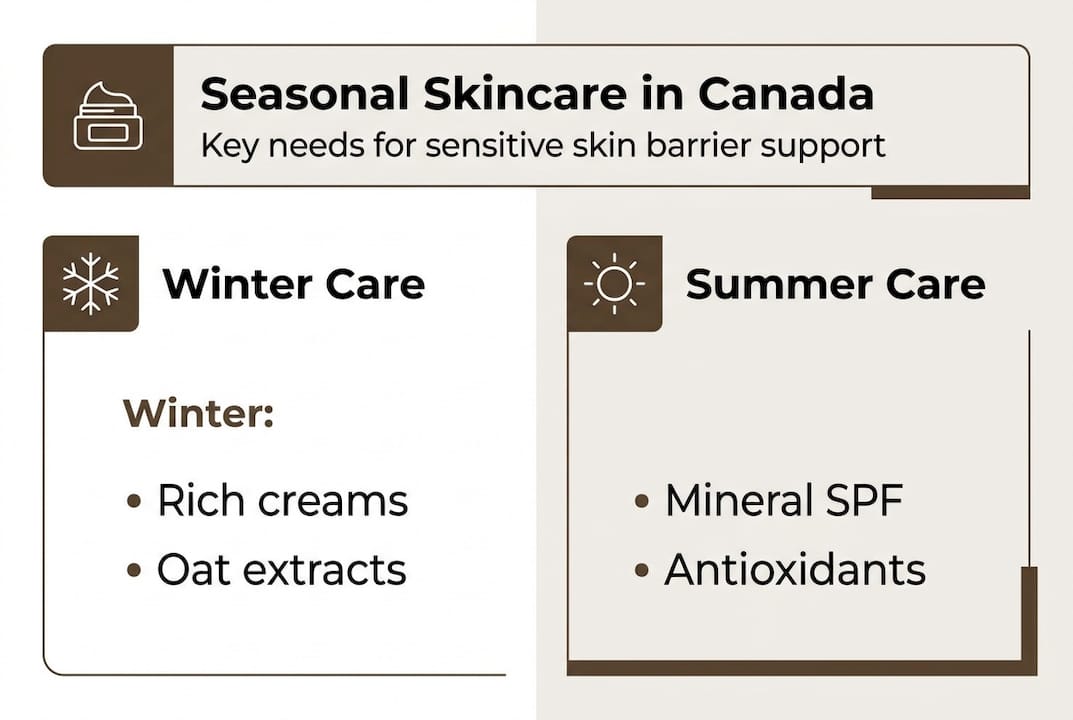
Winter demands richer formulations that combat extreme dryness. Switch from lightweight lotions to cream-based moisturisers containing higher concentrations of occlusives like squalane and shea butter. These ingredients create a protective seal that prevents moisture evaporation in harsh conditions. Add anti-inflammatory ingredients such as colloidal oatmeal and allantoin to calm reactivity triggered by barrier compromise.
Summer requires lighter textures that provide hydration without heaviness. Gel-cream formulations deliver moisture whilst allowing skin to breathe in humid conditions. Focus shifts to ingredients that address UV damage and pigmentation, including niacinamide, vitamin C, and alpha arbutin. Maintain barrier support through lighter ceramide serums rather than thick creams that feel uncomfortable in heat.
| Season | Moisturiser texture | Key ingredients | Additional focus |
|---|---|---|---|
| Winter | Rich cream | Ceramides, squalane, oat extract | Barrier repair and occlusion |
| Spring | Medium lotion | Ceramides, niacinamide, peptides | Barrier renewal and brightening |
| Summer | Gel-cream | Niacinamide, vitamin C, hyaluronic acid | UV protection and pigmentation |
| Autumn | Light cream | Ceramides, antioxidants, gentle AHAs | Barrier recovery and renewal |
Transition periods between seasons benefit from gentle exfoliation that removes accumulated dead cells without compromising barrier integrity. Use enzyme-based or low-concentration acid treatments once weekly to support natural cell turnover. This prepares skin to absorb richer winter products or lighter summer formulations more effectively.
Follow this sequence for seamless seasonal transitions:
-
Assess your current barrier health and identify specific concerns
-
Gradually introduce new products one at a time over two weeks
-
Adjust cleansing strength to match seasonal humidity levels
-
Modify moisturiser texture whilst maintaining ceramide content
-
Add or remove occlusives based on environmental moisture
-
Incorporate seasonal treatments like antioxidants or gentle exfoliants
Consistency in foundational steps remains crucial year-round. Gentle, fragrance-free cleansers prevent unnecessary irritation regardless of season. The skincare collection and skin care collection offer formulations designed for sensitive skin that adapt to seasonal needs without causing disruption.
Maintain barrier support through every transition by keeping ceramide-rich products as your routine’s core. Adjust surrounding products to address seasonal concerns, but never compromise the fundamental barrier repair that sensitive skin requires continuously. This approach prevents the reactivity spikes that occur when routines change too drastically between seasons.
Explore premium seasonal skincare solutions
Canadian-formulated skincare products address the unique challenges your sensitive skin faces through dramatic seasonal shifts. Premium formulations from Body Face Scalp™ focus on ceramide-rich, barrier-supportive ingredients that maintain skin health whether you are battling winter dryness or summer hyperpigmentation. These targeted solutions work with your skin’s natural processes rather than against them.

The skincare collection and skin care collection offer fragrance-free options specifically developed for sensitive and eczema-prone skin. Each product delivers concentrated actives without irritating additives, allowing you to build a routine that adapts seamlessly across seasons. The barrier restoring moisturizer provides year-round foundation whilst complementary serums and treatments address seasonal concerns.
Pro Tip: Consistent product use through season transitions delivers best results, as barrier repair requires sustained ceramide replenishment rather than reactive treatment of symptoms after damage occurs.
Frequently asked questions
Why does my skin feel different in each season?
Seasonal environmental changes directly impact your skin barrier’s lipid composition and moisture retention capacity. Winter cold depletes ceramides whilst summer UV triggers inflammation, creating distinct challenges that manifest as dryness, sensitivity, or pigmentation depending on conditions.
How can I adjust my routine without irritating sensitive skin?
Introduce new products gradually over two weeks, maintaining core barrier-repair ingredients whilst adjusting textures and targeted treatments. Keep cleansing gentle and fragrance-free year-round, modifying only moisturiser weight and seasonal actives to prevent disruption.
Are ceramides really useful for seasonal skin changes?
Ceramides provide measurable barrier improvements, with studies showing 15.31% hydration increases from supplementation. They directly replenish the lipids that seasonal stressors deplete, addressing root causes rather than temporarily masking symptoms that return when conditions worsen.
Can sun exposure worsen my pigmentation during summer?
Summer UV and visible light significantly intensify melanogenesis, darkening existing marks and creating new pigmentation from any inflammation. Broad-spectrum protection with niacinamide reduces hyperpigmentation severity by up to 16 ΔITA° units when applied consistently.
What ingredients should I avoid if I have eczema-prone skin?
Eliminate fragrances, essential oils, and high-concentration acids that compromise already vulnerable barriers. Focus on oat-based soothing ingredients, ceramides for lipid replenishment, and gentle formulations that support rather than strip your skin’s natural protective mechanisms.