

What skincare ingredients should I avoid?
TL;DR:
- Avoid skincare ingredients like formaldehyde releasers, synthetic fragrances, SLS, and certain preservatives that can cause irritation and sensitization. Recognize that fragrance, denatured alcohol, and SLS are key triggers for sensitive and dry skin, while comedogenic ingredients threaten acne-prone skin; always read labels carefully. Implement a phased approach by removing common irritants, repairing the skin barrier, and reintroducing products gradually based on individual tolerance.
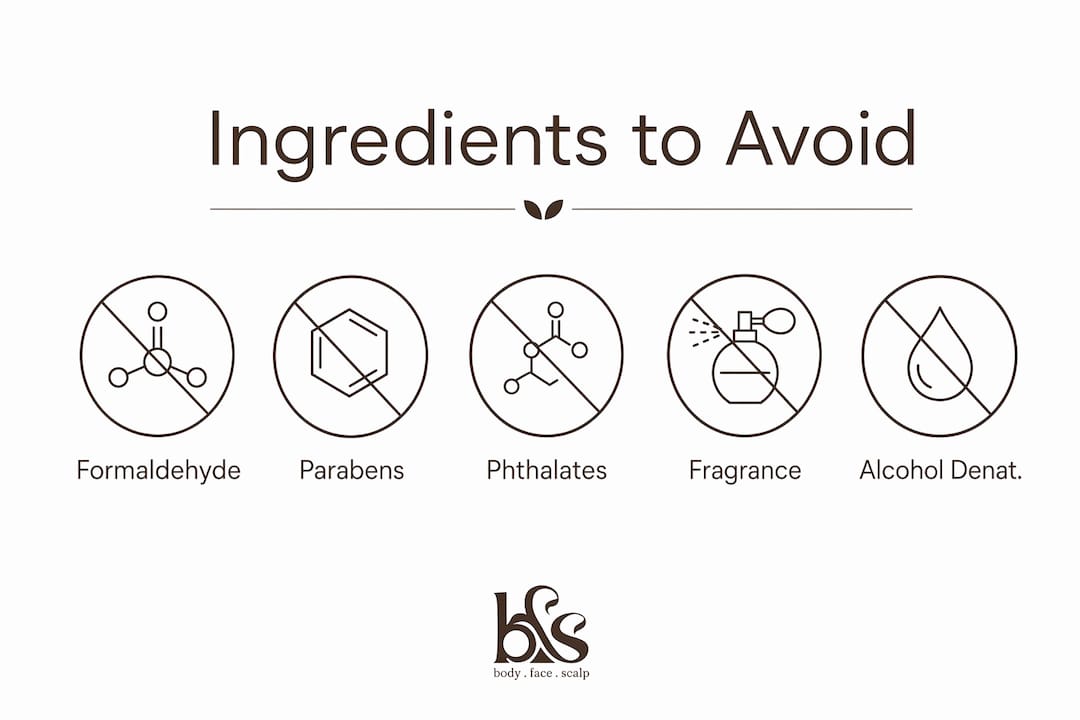
Certain skincare ingredients should be avoided because they carry documented risks of irritation, sensitization, and allergic reaction, particularly for individuals managing dryness, sensitivity, or acne-prone skin. The ingredients most consistently flagged in dermatological research include formaldehyde and its releasers, synthetic and natural fragrances, harsh surfactants like sodium lauryl sulfate, and preservatives such as parabens and phthalates. The American Cancer Society notes that while most cosmetic exposures carry low absorption risk, specific ingredients including formaldehyde, benzene, and talc raise legitimate health concerns. Knowing what skincare ingredients should be avoided is not about fear. It is about making informed choices that protect your skin barrier and prevent unnecessary reactions before they start.
What skincare ingredients should I avoid in preservatives?
Preservatives are necessary to prevent microbial growth in skincare products, but several categories carry a well-established history of causing contact allergy and sensitization. Understanding which ones to watch for is the first practical step in building a safer routine.
Formaldehyde and formaldehyde releasers are among the most clinically significant. A meta-analysis of 158 studies covering over 1.3 million dermatitis patients found a formaldehyde contact allergy prevalence of approximately 2.88%, with quaternium-15 showing a clinical relevance rate of 55.67%. That figure means more than half of people who test positive for quaternium-15 sensitivity are reacting to it in real-world product use, not just in a lab setting. The releasers most commonly found on ingredient labels include:
- Quaternium-15 (one of the most potent releasers)
- DMDM hydantoin (common in shampoos and conditioners)
- Imidazolidinyl urea (found in lotions and creams)
- Diazolidinyl urea (often paired with parabens)
- Bronopol (2-bromo-2-nitropropane-1,3-diol)
None of these names contain the word “formaldehyde,” which makes label reading genuinely difficult without prior knowledge.
Parabens and phthalates are a second category worth scrutiny. Consumer Reports identifies phthalates, parabens, and formaldehyde releasers as ingredients linked to endocrine disruption, irritation, and potential carcinogenicity. The European Union has banned or restricted several parabens in cosmetics, a regulatory signal that carries weight even for Canadian consumers. Methylparaben and propylparaben remain the most widely used, appearing in moisturisers, foundations, and sunscreens.
Pro Tip: When scanning an ingredient list, search for the suffix “-paraben” and cross-reference any unfamiliar preservative names against a database like the EWG Skin Deep or the CosDNA ingredient checker before purchasing.
Which common irritants trigger reactions in sensitive or dry skin?
Sensitive and dry skin share a compromised barrier, meaning irritants penetrate more easily and cause disproportionate reactions. Three ingredients account for the majority of reactive skin flare-ups in clinical practice.
-
Fragrance is the single most common trigger. Clinical guidance for reactive skin identifies fragrance as the leading cause of flare-ups, encompassing both synthetic parfum and natural essential oils like lavender, citrus, and eucalyptus. This matters because many consumers assume “natural” fragrances are automatically safe. They are not. Fragrance molecules, whether synthesised in a lab or extracted from a plant, interact with skin receptors in the same way.
-
Denatured alcohol (alcohol denat.) disrupts the skin’s lipid barrier by stripping away the natural oils that hold moisture in. For dry or barrier-impaired skin, repeated exposure to alcohol denat. accelerates transepidermal water loss, leaving skin tighter, more reactive, and more vulnerable to secondary irritants. It appears frequently in toners, setting sprays, and lightweight serums marketed as “fast-absorbing.”
-
Sodium lauryl sulfate (SLS) provokes positive irritant reactions in 22.4%.html) of patch-tested patients, making it one of the most significant surfactant irritants in dermatology. SLS is so reliably irritating that it is used as the standard irritant control in patch testing. If you experience unexplained redness or tightness after cleansing, SLS in your face wash or body cleanser is the first ingredient to investigate.
One distinction worth making: not all alcohols are harmful. Fatty alcohols like cetyl alcohol, stearyl alcohol, and cetearyl alcohol are emollients that support the skin barrier rather than damage it. The harmful ones are short-chain alcohols, specifically ethanol, isopropyl alcohol, and alcohol denat.
Pro Tip: “Fragrance-free” on a label does not guarantee zero fragrance exposure. Masking fragrances are sometimes added to neutralise a product’s natural scent without being disclosed as fragrance. Look for products that list every ingredient and confirm no parfum, fragrance, or essential oil appears anywhere in the INCI list.

For a deeper look at barrier-strengthening alternatives, we have outlined the specific ingredients that support rather than compromise sensitive skin.
Are there ingredients acne-prone skin should specifically avoid?
Acne-prone skin requires a different avoidance strategy than sensitive or dry skin, though there is meaningful overlap. The primary concern shifts from irritation to pore-clogging, inflammation, and disruption of the skin’s natural sebum balance.
Comedogenic ingredients are those rated to clog pores, and their impact varies by concentration and individual skin chemistry. Commonly flagged examples include:
- Isopropyl myristate and isopropyl palmitate (found in foundations and sunscreens)
- Coconut oil (highly comedogenic despite its popularity in natural skincare)
- Algae extract (can trigger milia and closed comedones in some skin types)
- Certain silicones like dimethicone in high concentrations, which may trap debris in pores for acne-prone individuals
Harsh actives used incorrectly are a second category. Benzoyl peroxide is clinically effective for acne, but applying it to a compromised or reactive barrier typically worsens inflammation before it improves the condition. Retinol on compromised skin similarly causes increased irritation, and barrier repair is considered a prerequisite before introducing either ingredient at any concentration. Starting with a stable, fragrance-free, non-comedogenic base routine is the correct sequence, not layering actives onto already-inflamed skin.
Alcohol denat. also belongs on the acne avoidance list for a different reason. While it temporarily reduces surface oiliness, it triggers a rebound sebum response as the skin attempts to compensate for the moisture loss, which can worsen breakouts over time.
How can you read skincare ingredient labels effectively?
The International Nomenclature of Cosmetic Ingredients (INCI) system governs how ingredients are listed on product labels globally, including in Canada. Ingredients appear in descending order of concentration, with the highest-concentration ingredients listed first. Anything below 1% concentration can appear in any order, which is where many preservatives and fragrance components are hidden.
The practical challenge is that harmful ingredients to avoid in skincare rarely use their common names on labels. The table below maps the common name to its INCI label equivalent for the most frequently problematic ingredients:
| Common name | INCI label name(s) |
|---|---|
| Formaldehyde releaser | Quaternium-15, DMDM hydantoin, imidazolidinyl urea |
| Denatured alcohol | Alcohol denat., SD alcohol, ethanol |
| Sodium lauryl sulfate | Sodium lauryl sulfate, SLS |
| Synthetic fragrance | Parfum, fragrance |
| Parabens | Methylparaben, propylparaben, butylparaben |
| Phthalates | Diethyl phthalate (DEP), often listed under “fragrance” |
Effective formaldehyde avoidance requires checking for this full set of releaser names, since none of them include the word “formaldehyde” on the label. This is not an oversight. It is simply how INCI naming works, and it places the burden of knowledge on the consumer.
Apps like CosDNA, INCI Decoder, and the EWG Skin Deep database allow you to paste or photograph an ingredient list and receive a safety rating for each component. These tools are not perfect, but they are far more reliable than relying on front-of-pack marketing claims like “clean,” “natural,” or “dermatologist-tested,” none of which carry regulated definitions in Canada.
Pro Tip: When evaluating a new product, focus your scrutiny on ingredients listed in positions 5 through 15 on the label. This is where preservatives, emulsifiers, and fragrance components most commonly appear, and where the highest-risk ingredients tend to cluster.
For guidance on gentle exfoliation options that work without compromising your barrier, we have covered the safest approaches for sensitive skin types.
Key takeaways
Avoiding harmful skincare ingredients requires knowing their INCI label names, removing fragrance and harsh surfactants first, and repairing the skin barrier before introducing any active ingredients.
| Point | Details |
|---|---|
| Formaldehyde releasers are hidden | Look for quaternium-15, DMDM hydantoin, and imidazolidinyl urea on labels, not “formaldehyde.” |
| Fragrance is the top irritant | Both synthetic parfum and natural essential oils trigger reactive skin flare-ups. |
| SLS irritates nearly 1 in 4 | Sodium lauryl sulfate provokes reactions in 22.4% of patch-tested patients. |
| Barrier repair comes first | Stabilise the skin barrier before introducing retinol, benzoyl peroxide, or other actives. |
| Label claims are unregulated | “Clean” and “natural” carry no legal definition in Canada; read the INCI list directly. |
What I have learned from years of watching people get this wrong
The most common mistake I see is people stripping their routine down to nothing after a reaction, then rebuilding it too quickly with the same problematic ingredients in different packaging. They swap one fragrance-heavy moisturiser for another that is labelled “sensitive skin” but still contains alcohol denat. and masking fragrances. The label changed. The formulation did not.
The second mistake is treating ingredient avoidance as a permanent, all-or-nothing position. Parabens, for example, have a decades-long safety record at regulated concentrations. The concern is not that they are inherently toxic. The concern is that for someone already dealing with a sensitised or compromised barrier, adding any potential irritant slows recovery. Once the barrier is stable, many of these ingredients become far less problematic.
What actually works is the phased approach. Remove the highest-probability irritants first: fragrance, alcohol denat., and SLS. Give your skin four to six weeks to stabilise. Then reintroduce one product at a time, patch-testing on the inner arm for 48 hours before applying to the face. This process feels slow, but it is the only reliable way to identify your personal triggers rather than guessing.
The barrier is the foundation. Everything else, actives, treatments, targeted serums, works better on a barrier that is intact. Trying to treat acne or hyperpigmentation on a reactive, compromised barrier is like painting a wall with holes in it. The results will always disappoint. Repair first, treat second.
— Mohid
Skincare that skips the ingredients you are trying to avoid
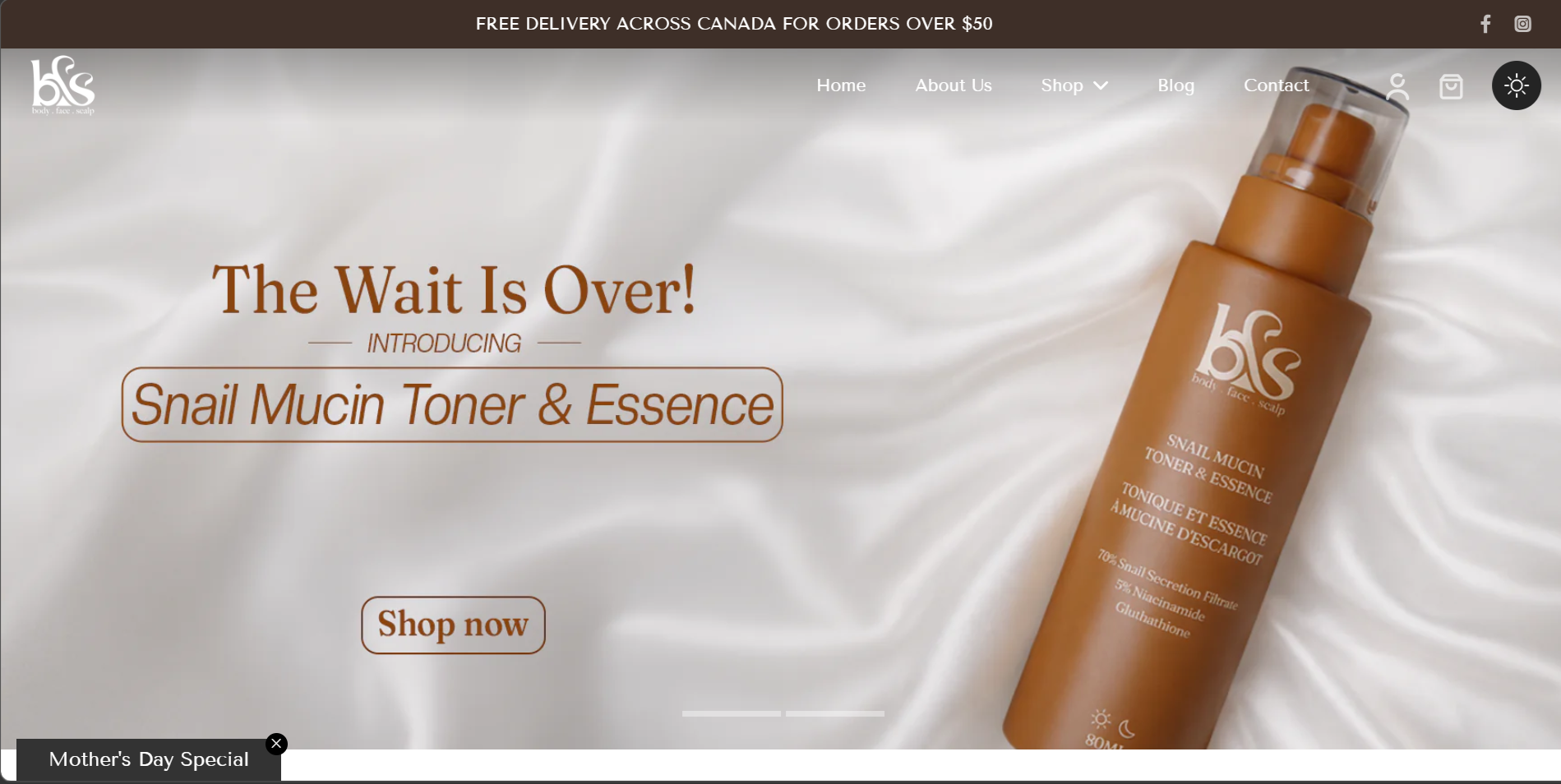
At Bodyfacescalp, we formulate without fragrance, without alcohol denat., and without formaldehyde releasers, because we know these are the ingredients most likely to set your skin back rather than move it forward. Our barrier restoring moisturiser is built around ceramides, humectants, and skin-identical lipids that repair and protect without triggering the reactions you are working to avoid. If you are ready to rebuild your routine on a cleaner foundation, explore our full skincare collection to find formulations designed specifically for sensitive, dry, and acne-prone skin in Canada’s demanding climate.
FAQ
What are the most harmful skincare ingredients to avoid?
The most consistently harmful skincare ingredients are formaldehyde releasers (quaternium-15, DMDM hydantoin), synthetic and natural fragrances, sodium lauryl sulfate, denatured alcohol, and parabens. These are linked to contact allergy, barrier disruption, and sensitisation in clinical research.
Is fragrance in skincare really that bad for sensitive skin?
Fragrance is the leading trigger for reactive skin flare-ups, and this applies to both synthetic parfum and natural essential oils. Even products labelled “fragrance-free” may contain masking fragrances, so reading the full INCI list is the only reliable check.
Are parabens in skincare actually unsafe?
Parabens at regulated concentrations have a long safety record, but Consumer Reports identifies them as ingredients linked to endocrine disruption concerns. For individuals with sensitive or reactive skin, avoiding them during barrier repair is a reasonable precaution.
What ingredients should people with acne avoid?
Acne-prone skin benefits from avoiding comedogenic ingredients like isopropyl myristate, coconut oil, and high-concentration silicones, as well as denatured alcohol, which triggers rebound sebum production. Harsh actives like retinol and benzoyl peroxide should only be introduced after the barrier is stable.
How do I check if a skincare product has unsafe ingredients?
Use the INCI list on the product label and cross-reference it with databases like CosDNA, INCI Decoder, or the EWG Skin Deep tool. These resources flag known irritants, allergens, and unsafe ingredients in cosmetics so you can make an informed decision before purchasing.