


Multi peptide serum benefits for skin health
TL;DR:
- Multi-peptide serums combine various peptide types to target collagen production, skin barrier strength, and hydration simultaneously. They outperform single-peptide products by addressing multiple aging mechanisms through well-formulated blends containing named peptides like Matrixyl 3000 and copper peptides, supporting sensitive skin, and improving long-term skin resilience. Consistent use paired with supportive ingredients and routine fundamentals ensures noticeable results over months, making peptides a valuable, long-term anti-aging investment.
Multi-peptide serums are skincare formulations that combine several peptide types to simultaneously stimulate collagen production, strengthen the skin barrier, and improve hydration. These are not single-ingredient products. They are multi-targeted treatments designed to address fine lines, dryness, and sensitivity through complementary mechanisms working in parallel. For anyone managing the effects of Canada’s harsh climate on skin, or looking for a gentler path to firmer, more resilient skin, understanding what these serums actually do, and how to use them well, makes the difference between real results and wasted product.
What are the multi peptide serum benefits for your skin?
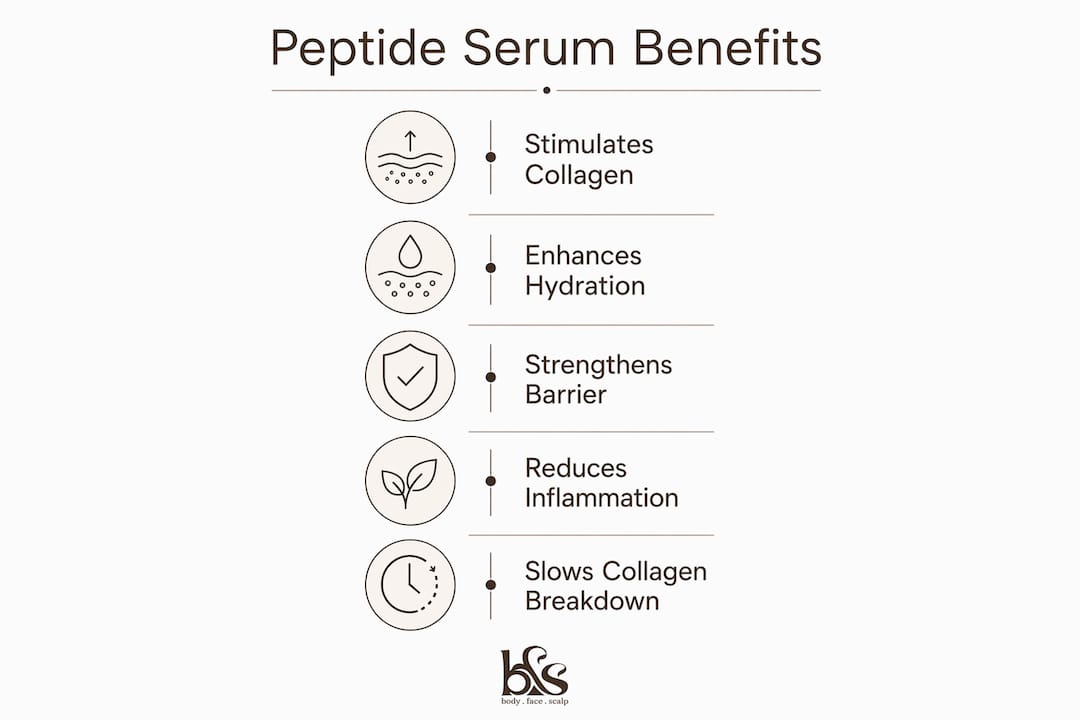
Multi-peptide serums deliver their results through three distinct peptide classes, each targeting a different aspect of skin ageing and repair. Understanding how these classes work helps you choose the right product and set realistic expectations.

Signal peptides are the most well-known category. They communicate directly with fibroblasts, the cells responsible for producing collagen and elastin, instructing them to increase output. The result is gradual improvement in firmness and a smoother skin texture over time. Matrixyl 3000, a combination of palmitoyl tripeptide-1 and palmitoyl tetrapeptide-7, is one of the most studied signal peptides and appears in many quality formulations.
Carrier peptides transport minerals like copper to the skin’s repair sites. Copper peptide GHK-Cu, for example, supports wound healing and tissue regeneration. It is effective, but it does introduce some formulation considerations we cover later in this article.
Enzyme-inhibiting peptides work differently. Rather than stimulating production, they slow the breakdown of existing collagen by inhibiting enzymes that degrade it. Argireline, a well-known enzyme inhibitor, also relaxes facial muscle contractions, which softens the appearance of expression lines over time.
The reason multi-peptide blends outperform single-peptide formulas is straightforward: ageing is not caused by one mechanism. A serum containing Matrixyl 3000, Argireline, and copper peptides addresses collagen loss, muscle-driven lines, and tissue repair simultaneously. Single-ingredient serums address only one pathway.
Pro Tip: Look for serums that name specific peptides on the label rather than listing “peptide complex” without detail. Named peptides signal formulation transparency and allow you to verify the research behind each ingredient.
How do peptides support hydration and the skin barrier?
The skin barrier is the outermost layer of your skin, responsible for keeping moisture in and irritants out. When it is compromised, you experience dryness, redness, and heightened sensitivity. Peptides contribute to barrier repair and hydration through several pathways that make them particularly useful for sensitive or reactive skin types.
Peptides stimulate natural moisturising factors (NMFs), the compounds your skin produces to retain water within the stratum corneum. They also encourage hyaluronic acid production from within, rather than simply sitting on the surface as a topical humectant does. This distinction matters because internally produced hyaluronic acid integrates more deeply into the skin’s structure.
The anti-inflammatory properties of certain peptides add another layer of benefit. Palmitoyl Tetrapeptide-7 reduces skin irritation and redness, making multi-peptide serums suitable for those who cannot tolerate stronger actives like retinoids or exfoliating acids. This is not a compromise. For many skin types, particularly those prone to sensitivity, peptides are the more appropriate long-term strategy.
Key hydration and barrier benefits include:
- Stimulation of NMFs to improve water retention within the skin
- Support for hyaluronic acid synthesis at a cellular level
- Reduction of inflammation and redness through peptides like Palmitoyl Tetrapeptide-7
- Improved skin resilience and reduced reactivity over consistent use
- Compatibility with sensitive skin that cannot tolerate retinoids or acids
For a deeper look at how peptides interact with other barrier-supporting ingredients, the relationship between ceramides, humectants, and peptides is worth understanding before building your routine.
How do multi-peptide serums compare to retinoids and vitamin C?
Peptides occupy a specific and valuable position in the anti-ageing ingredient hierarchy. They are not the most potent option available, but they are among the most broadly tolerated, and they work synergistically with other actives rather than competing with them.
| Ingredient | Primary mechanism | Speed of results | Sensitivity risk | Best combined with |
|---|---|---|---|---|
| Multi-peptide serum | Collagen stimulation, barrier support | Gradual (8–12 weeks) | Very low | Retinoids, vitamin C, SPF |
| Retinoids | Cell turnover acceleration | Moderate (4–8 weeks) | Moderate to high | Peptides, moisturisers |
| Vitamin C | Antioxidant protection, collagen synthesis | Moderate (4–6 weeks) | Low to moderate | Peptides, SPF |
| Injectable peptides | Direct structural intervention | Immediate | Requires medical oversight | Not applicable topically |
Retinoids increase cell turnover and are clinically proven to reduce wrinkles, but they frequently cause peeling, redness, and photosensitivity, particularly during the adjustment period. Topical peptides support collagen gradually over weeks to months, without the irritation cycle that retinoids require. For those who are new to anti-ageing actives, or who have skin that reacts poorly to retinoids, peptides are the logical starting point.
Vitamin C is an antioxidant that also supports collagen synthesis, and it pairs well with peptides. The two ingredients address different aspects of collagen health: vitamin C protects existing collagen from oxidative damage, while peptides signal new collagen production. Used together in a routine, they are complementary rather than redundant.
One distinction worth noting clearly: injectable peptides are an entirely separate category from topical cosmetic peptides. Experimental injectables carry different safety profiles and regulatory considerations. Topical serums are cosmetic products with a well-established safety record. Do not conflate the two when evaluating risk.
What practical factors affect how well a peptide serum works?
The effectiveness of a multi-peptide serum depends as much on formulation quality and consistent use as it does on the peptides themselves. Choosing a product without understanding these factors leads to disappointment, not because peptides do not work, but because the conditions for their effectiveness were not met.
-
Check the supporting ingredients. Peptides require a stable formulation environment to remain active. Hyaluronic acid and niacinamide enhance peptide stability and improve skin penetration. A serum that pairs peptides with these humectants and skin-conditioning agents will outperform one that isolates peptides in a basic base.
-
Consider copper peptide compatibility. Copper peptide GHK-Cu aids skin repair and texture improvement, but it can introduce a metallic scent and may reduce compatibility with retinoids. If you use retinoids regularly, a copper-free peptide serum often integrates more smoothly into your routine.
-
Plan for the correct timeline. Hydration improvements are noticeable within the first few days of use. Meaningful wrinkle reduction takes 8 to 12 weeks of consistent application. Structural improvements to firmness and elasticity require 4 to 6 months of twice-daily use. This is not a slow product. It is a product that works on the skin’s biological timeline.
-
Evaluate cost relative to usage. Quality multi-peptide serums typically cost between $20 and $30 for a 30 to 60ml bottle. At twice-daily application, this works out to approximately 15 to 20 cents per application, making them cost-effective long-term compared to more expensive anti-ageing treatments.
-
Prioritise cosmetic elegance. Texture, scent, and finish directly influence whether you use a product consistently. A serum that feels pleasant and absorbs well is one you will actually apply twice daily for months. Formulations with humectants improve both absorption and the sensory experience.
Pro Tip: Apply your peptide serum to slightly damp skin after cleansing. Damp skin absorbs water-soluble ingredients more effectively, and the added moisture helps humectants like hyaluronic acid draw water into the skin rather than pulling it from deeper layers.
Key takeaways
Multi-peptide serums work because they address collagen loss, barrier compromise, and inflammation simultaneously through complementary peptide classes, making them one of the most broadly applicable anti-ageing ingredients available.
| Point | Details |
|---|---|
| Three peptide classes work together | Signal, carrier, and enzyme-inhibiting peptides each target different ageing mechanisms for better results. |
| Barrier and hydration benefits are real | Peptides stimulate NMFs and hyaluronic acid production, reducing sensitivity and improving resilience. |
| Results require consistent use | Hydration improves quickly; wrinkle reduction takes 8 to 12 weeks; structural changes take 4 to 6 months. |
| Formulation quality determines efficacy | Peptides paired with hyaluronic acid and niacinamide penetrate better and remain more stable. |
| Peptides complement, not replace, other actives | Used alongside vitamin C and SPF, peptides form part of a complete, synergistic routine. |
Why I think peptides are the most underrated long-term skincare investment
Most people come to peptides after trying something stronger and experiencing irritation, or after expecting instant results from a product that requires patience. I understand that frustration, but I think it reflects a misunderstanding of what peptides are designed to do.
Peptides are not a shortcut. They are a long-term structural strategy that works best when the basics are already in place: a gentle cleanser, a moisturiser that supports your barrier, and daily SPF. Without those foundations, no serum, peptide or otherwise, will perform at its potential. Peptides do not act like fillers. They provide subtle, cumulative improvements that build on each other over months.
The most common mistake I see is people abandoning a peptide serum after three or four weeks because they do not see dramatic changes. The skin’s collagen cycle does not operate on a four-week timeline. What you are building with consistent peptide use is structural resilience, the kind that shows up as better skin quality over years, not a sudden transformation in weeks.
The second mistake is using peptides in isolation and expecting them to carry the entire routine. Pair them with a complete skincare routine that includes SPF and a good moisturiser, and you will see the compounding effect that makes peptides genuinely worth the investment. Treat them as a secondary, supportive layer and they will reward you with exactly that: steady, reliable support for skin that ages more gracefully.
— Mohid
Explore Bodyfacescalp’s multi-peptide skincare collection
At Bodyfacescalp, we formulate for real skin conditions, including the dryness and sensitivity that come with Canadian winters and fluctuating climates. Our Luster Booster Multi Peptide Serum combines targeted peptides with hyaluronic acid and niacinamide to support hydration, barrier repair, and gradual firming in a water-based formula that layers cleanly under moisturiser and SPF.
Whether you are new to peptide serums or looking to upgrade your current formulation, our skincare collection includes options suited to sensitive, dry, and ageing skin types. Every product is formulated with ingredient transparency and barrier health as the guiding principles, so you know exactly what you are applying and why it works.
FAQ
What do multi-peptide serums actually do for skin?
Multi-peptide serums stimulate collagen and elastin production, support the skin barrier, and improve hydration by using several peptide types simultaneously. Each peptide class targets a different mechanism, making the combined formula more effective than single-peptide products.
How long does it take to see results from a peptide serum?
Hydration improvements are typically noticeable within the first few days. Visible wrinkle reduction takes 8 to 12 weeks of consistent twice-daily use, and meaningful improvements to skin firmness and elasticity require 4 to 6 months.
Can peptide serums be used with retinoids?
Yes, peptides and retinoids are complementary. Peptides stimulate collagen production while retinoids accelerate cell turnover. If your serum contains copper peptides, use it separately from retinoids to avoid potential interactions and sensitivity.
Are peptide serums suitable for sensitive skin?
Peptide serums are well-tolerated by sensitive skin types and carry a very low irritation risk compared to retinoids or exfoliating acids. Peptides like Palmitoyl Tetrapeptide-7 actively reduce inflammation and redness, making them a suitable option for reactive skin.
What ingredients should a good peptide serum include alongside peptides?
The most effective peptide serums pair their peptide blend with hyaluronic acid for hydration and niacinamide for barrier support and stability. These supporting ingredients improve peptide penetration and enhance the overall sensory experience of the formula.